

Coherent detection is the foundational technology behind long‑haul, metro, and high‑capacity optical networks. Unlike direct detection, which only measures optical intensity, coherent detection recovers the complete optical field—including amplitude, phase, frequency, and polarization state.
How Coherent Detection Works
A coherent receiver mixes the incoming optical signal with a local oscillator (LO) laser. The mixed signal is then fed into a 90° optical hybrid and balanced photodetectors, which preserve the full amplitude, phase, frequency, and polarization information.
High‑speed analog‑to‑digital converters (ADCs) digitize the received analog waveform. A digital signal processor (DSP) then compensates for chromatic dispersion (CD), polarization‑mode dispersion (PMD), polarization crosstalk, and carrier phase noise. The resulting output signal is robust and reliable, capable of spanning hundreds or even thousands of kilometers without requiring optical dispersion compensation along the transmission line.
Typical Coherent Transceivers
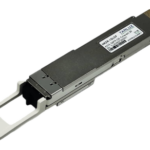
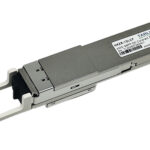
Coherent technology is available in a variety of form factors:
-
100G/200G/400G CFP2‑DCO (Digital Coherent Optics), with varying rates and packages depending on the application
-
400G QSFP‑DD ZR and ZR+
-
800G OSFP ZR and ZR+
-
Embedded coherent line cards for long‑haul DWDM systems
These modules utilize advanced modulation formats such as DP‑QPSK, DP‑16QAM, and DP‑64QAM. Each constellation point encodes multiple bits, which is why coherent systems achieve significantly higher spectral efficiency than traditional IM/DD (intensity modulation / direct detection) systems.
Advantages and Limitations
Coherent detection offers three major advantages:
1. Extended Transmission Reach
Coherent receivers operate reliably over distances ranging from hundreds to thousands of kilometers. The DSP compensates for chromatic dispersion electronically—a key impairment that severely limits direct‑detection links.
2. High Spectral Efficiency
Industry analyses indicate that coherent systems can deliver 4 to 8 times higher spectral efficiency than direct‑detection systems. This is critical in DWDM networks, where every GHz of spectrum represents a valuable resource.
3. Improved Receiver Sensitivity
Coherent detection provides significantly better receiver sensitivity (typically by several dB) compared to direct detection. This reduces the need for amplifiers and regenerators in long‑haul links and improves tolerance to optical signal‑to‑noise ratio (OSNR), enabling reliable transmission over longer distances.
The trade‑offs include higher power consumption, higher cost, and greater system complexity. For example, a standard 400G ZR coherent pluggable module typically consumes between 15‑18W, while ZR+ or high‑power‑output versions can reach 20‑25W or more. The DSP chip, tunable lasers, and precision optics all add to both cost and thermal load. In addition, wavelength control and firmware calibration demand more sophisticated operational and maintenance procedures.
Summary of Revisions
| Item | Original | Revised |
|---|---|---|
| CFP2‑DCO rate scope | «100G/200G CFP2‑DCO» | «100G/200G/400G CFP2‑DCO» |
| Sensitivity improvement | «15–20 dB» | «several dB (typical)» |
| Power consumption range | «15‑20W» | «15‑18W (standard ZR), 20‑25W or more (ZR+)» |