Fiber Optic Transceivers

XPO Pluggable Optics: A New Blueprint for AI Bandwidth, Cooling, and Reliability

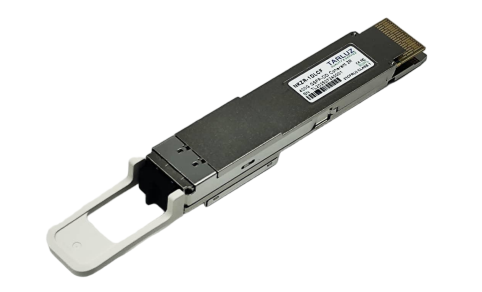
Massive AI clusters are pushing traditional pluggable optics to their physical limits in power, cooling, and density. As traffic surges, the industry requires a solution that balances high-performance integration with the operational ease of standard modules. This article explores how XPO (eXtra-dense Pluggable Optics) bridges this gap, providing a transformative path for scaling AI infrastructure […]

AI, Fiber Optic Transceivers, Industry knowledge

How Coherent Optics Improve DCI Reach and Energy Efficiency

Modern data center interconnects (DCI) often require high-capacity optical links over tens to hundreds of kilometers. Traditional IM-DD (Intensity Modulation with Direct Detection) modules—using NRZ or PAM4—are simple and cost-effective for short distances, but they face limitations in dispersion tolerance, noise resilience, and spectral efficiency over longer spans. Coherent optical modules overcome these limitations by […]

Fiber Optic Transceivers

Main Causes of Optical Module Failure and Protective Measures

Optical modules must be handled with standardized procedures during application, as any non-compliant action may cause potential damage or permanent failure. Main Causes of Optical Module Failure The primary causes of optical module failure are performance degradation due to ESD damage, and optical path discontinuity caused by optical port contamination and damage. The main reasons […]

Fiber Optic Transceivers

MSA Standards Explained

As a leading provider of third-party optical transceivers, TARLUZ understands the importance of Multi-Source Agreement (MSA) standards. MSA stands for Multi-Source Agreement – a document that defines the size, shape, electrical interface, and optical interface of optical transceivers. By following these standardized guidelines, manufacturers can design transceivers that are mechanically and electrically compatible with networking equipment from […]

Fiber Optic Transceivers, MSA

Understanding CPO, LPO, NPO, and OCS

In the field of high-speed optical interconnect, CPO, NPO, LPO, and OCS represent different technologies or packaging forms. The following is a detailed introduction to each of them: CPO (Co-Packaged Optics): This is a new type of optoelectronic integration technology. By packaging the optical module and the switching chip closely together, it significantly reduces the […]

Fiber Optic Transceivers, WHAT-IS

Introduction to 800G OSFP SR8

With the continuous development of AI and big data technologies, the demand for 800G optical transceiver modules in data centers and communication networks is constantly increasing. Among them, the 800G OSFP SR8 utilizes an 8-channel full-duplex transceiver design, capable of meeting the requirements of short-reach data center and cloud computing networks, offering high cost-effectiveness and […]

800G, Fiber Optic Transceivers

The Three Structural Types of OSFP Modules

The Octal Small Form Factor Pluggable (OSFP) module, widely adopted for high-speed optical interconnects, is available in three primary structural forms that address different thermal and mechanical requirements: Closed Top, Finned Top, and Riding Heatsink (RHS). Finned Top Heatsink (Open Top Heatsink) In contrast, the finned top design exposes heatsink fins on the upper surface. […]

Fiber Optic Transceivers

Coherent Optical Module: 400G QSFP-DD ZR/ZR+ Optical Module

In the era of explosive AI computing power and 5G-A, network traffic is surging, placing immense pressure on optical networks. Traditional non-coherent optical modules, with their low bandwidth and simple modulation methods, can no longer meet the demands of high-speed, long-distance, and high-density transmission. With the continuous maturation of key technologies such as digital signal […]

400G Network, Fiber Optic Transceivers

800G Optical Transceiver Q&A Collection (Part 1)

What are the application advantages of 800G optical module technology? As a disruptive force in data-center and high-performance-computing environments, 800 Gb/s optical-module technology is steering the industry toward higher bandwidth, lower cost, and reduced power consumption. The key benefits are: Dramatic increase in switching bandwidth: Compared with 400 Gb/s-port systems, 800G technology doubles the aggregate […]

FAQ, Fiber Optic Transceivers
  • 1
  • 2
WhatsApp TARLUZ