

What is the difference between NDR and XDR InfiniBand?
NDR delivers up to 400 Gb/s per port, while XDR doubles that to 800 Gb/s per port. XDR also offers higher port density (e.g., greater aggregate throughput) and enhanced SHARP (in‑network computing) capabilities.
How many ports does the NVIDIA QM9700 have?
The QM9700 provides 64 400G NDR ports through 32 dual‑port OSFP cages. Each physical OSFP cage houses two independent 400G ports.
What is the difference between QM9700 and QM9790?
Both provide 64 400G NDR ports. The QM9700 includes built‑in management and a Subnet Manager, while the QM9790 is designed for externally managed fabrics.
Does ConnectX‑7 use OSFP or QSFP112?
It can use either, depending on the adapter model and system design. Therefore, always verify the specific ConnectX‑7 interface before choosing cables or optical transceivers.
What optics are used for XDR 800G InfiniBand?
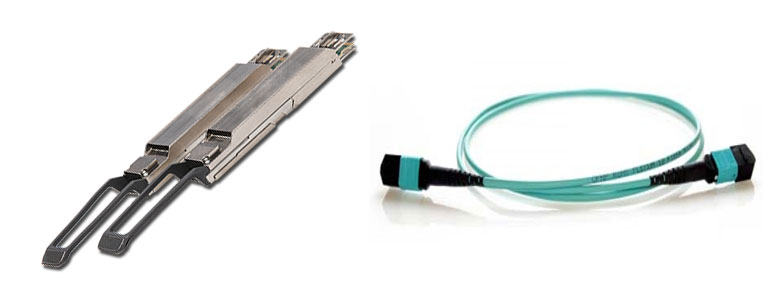
The Quantum‑X800 switch can use 1.6T dual‑port OSFP modules that carry two 800G XDR links, while ConnectX‑8 endpoints typically use 800G single‑port OSFP modules.
Can Ethernet optical transceivers be used in InfiniBand switches?
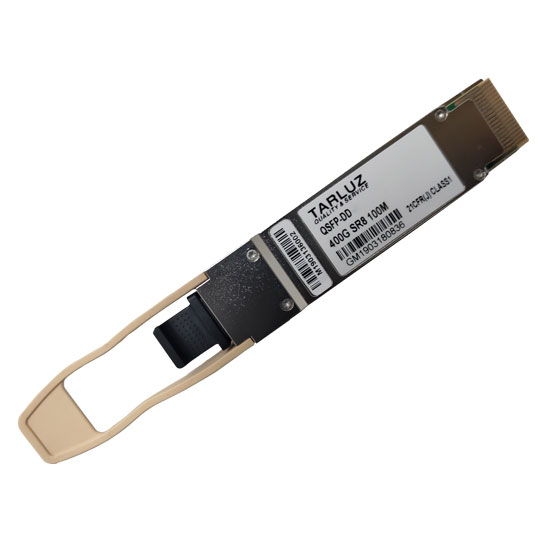
Not automatically. Even if speed and form factor match, electrical mapping, firmware encoding, optical specifications, and platform qualification must all be compatible with the InfiniBand switch or host channel adapter (HCA).
Is InfiniBand always better than Ethernet for GPU clusters?
No. InfiniBand is highly optimized for tightly coupled AI training and high‑performance computing, but modern RoCE Ethernet can also support large GPU clusters. The choice depends on workload, scale, congestion‑control requirements, operational practices, and total cost of ownership.