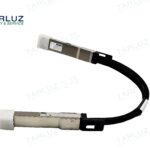


TL;DR: For in-rack connections under 1 meter, 1.6T OSFP224 DAC delivers zero power consumption, near-zero latency, and dramatically lower total cost compared to optical module + fiber solutions. Full details below.
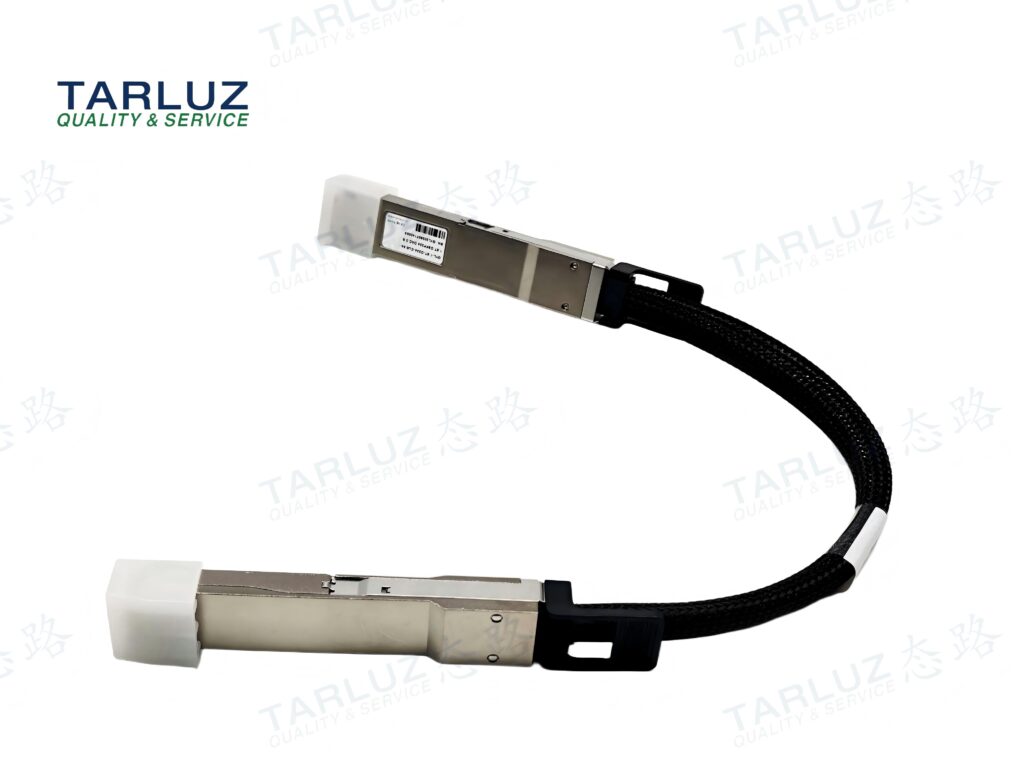
Quick Comparison Table
| Dimension | 1.6T OSFP224 DAC | Optical Module + Fiber |
|---|---|---|
| Power Consumption | Near-zero (passive) | 20–30 W per module pair |
| Latency | Nanosecond-level (no O-E-O conversion) | Microsecond-level (O-E-O delay) |
| Cost (per link) | Lowest (no laser/optical components) | 3–9× higher CapEx |
| Reach | Up to 1.0 m (25AWG) | 500 m+ (single-mode) |
| Deployment | Plug-and-play, no transceiver management | Requires transceivers + patch cords |
| Signal Path | Direct electrical | Electrical → Optical → Electrical |
| TCO Impact | Minimal cooling overhead | Significant cooling cost at scale |
| Best For | In-rack server-to-switch, GPU cluster | Cross-rack / cross-room / campus |
Why 1.6T OSFP224 DAC Wins in the Rack
1. Near-Zero Power, Maximum Efficiency
1.6T OSFP224 DAC operates at 0 W—no laser drivers, no DSP, no retimers. In a rack with hundreds of links, this eliminates substantial thermal load, directly reducing cooling costs and rack TDP. By contrast, a 1.6T optical module pair draws 20–30 W, and that heat must be managed 24/7.
2. Lowest Possible Latency
DAC transmits signals directly over copper—no optical-to-electrical-to-optical (O-E-O) conversion. This delivers nanosecond-level latency, critical for AI training synchronization and high-frequency trading workloads where every microsecond counts.
3. Dramatically Lower Cost
Passive DAC contains no laser, no optics, no retimer silicon. The result: the lowest cost per gigabit of any interconnect media. For hyperscale deployments with tens of thousands of links, this cost advantage compounds into millions of dollars in CapEx savings.
4. Proven at Scale in AI Clusters
Leading AI infrastructure deployments—including Meta’s AI training clusters—use DAC for rack-level training switch-to-GPU connections. With 1.6T OSFP224 DAC now supporting 8×200G PAM4 and full IEEE 802.3dj compliance, it is ready for the 224G/lane era.
When to Choose 1.6T OSFP224 DAC
Choose DAC when:
-
Link distance ≤ 1 m (in-rack)
-
Rack TDP or cooling budget is constrained
-
Lowest latency is required
-
CapEx minimization is a priority
Choose optical module + fiber when:
-
Distance exceeds 1 m (cross-rack, cross-room)
-
Structural cabling across long runs is needed
-
Single-mode fiber infrastructure is already deployed
Conclusion
For 1.6T in-rack interconnects, OSFP224 DAC is not merely an alternative—it is the default choice. Zero power, near-zero latency, lowest cost, and proven deployment at scale make it the smartest infrastructure decision for next-generation AI data centers.
Contact us to request a sample or discuss deployment options for your 1.6T rollout.